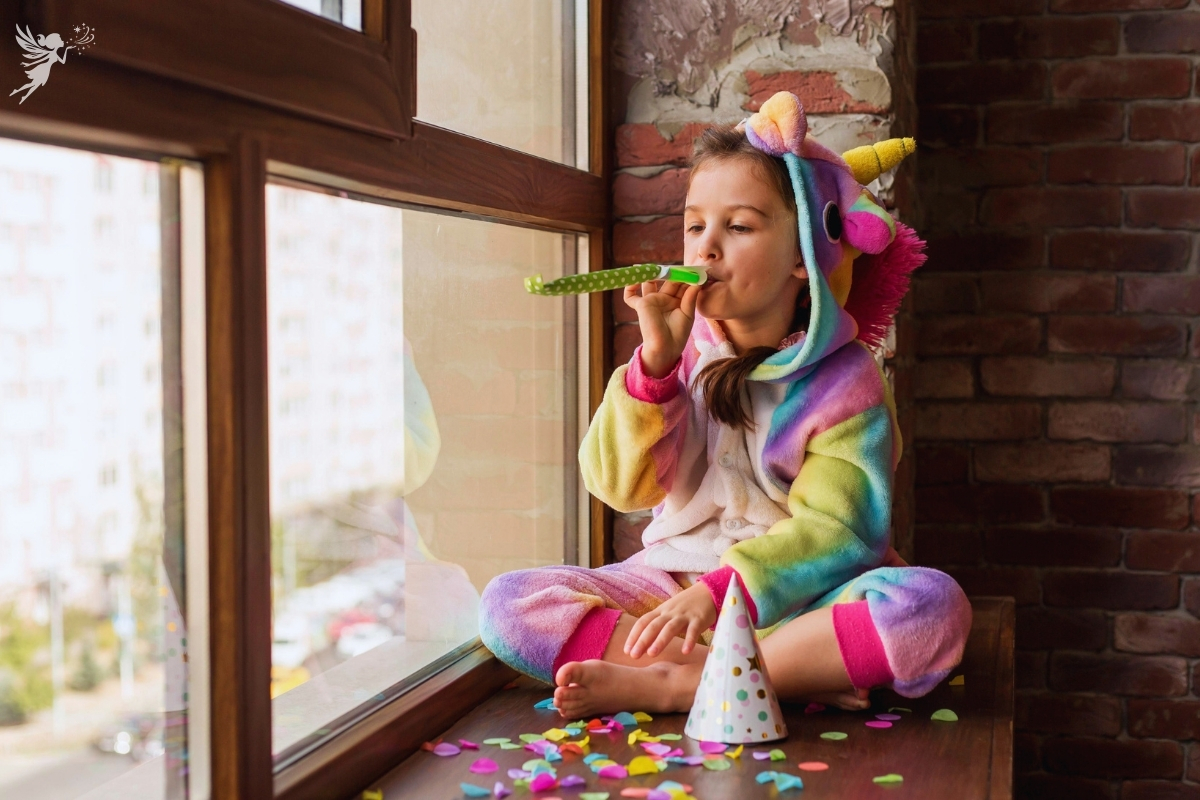
The Considerate Host’s Guide to Every Kind of Kid at the Party
I’ve planned a lot of parties over the years — for my own kids, for friends and a long string of “can you just help me figure this out” acquaintances. And there’s one thing that’s true of every single guest list I’ve ever made: it was never just one kind of kid showing up.
There’s always an allergy to plan around. A kid who hangs back by the snack table for the first twenty minutes. A kid who’s vibrating with energy before the candles are even lit. A kid who seems totally fine until the room gets loud and suddenly isn’t. None of that is a problem to solve — it’s just who’s actually in the room.
This blog post isn’t going to be a checklist you need to nail perfectly. It’s more like a reference you can dip into when you’re planning, so a few small choices make the day easier for the kids who need it, without changing the party for anyone else.
Not ready to start planning now? Save these ideas to Pinterest for later
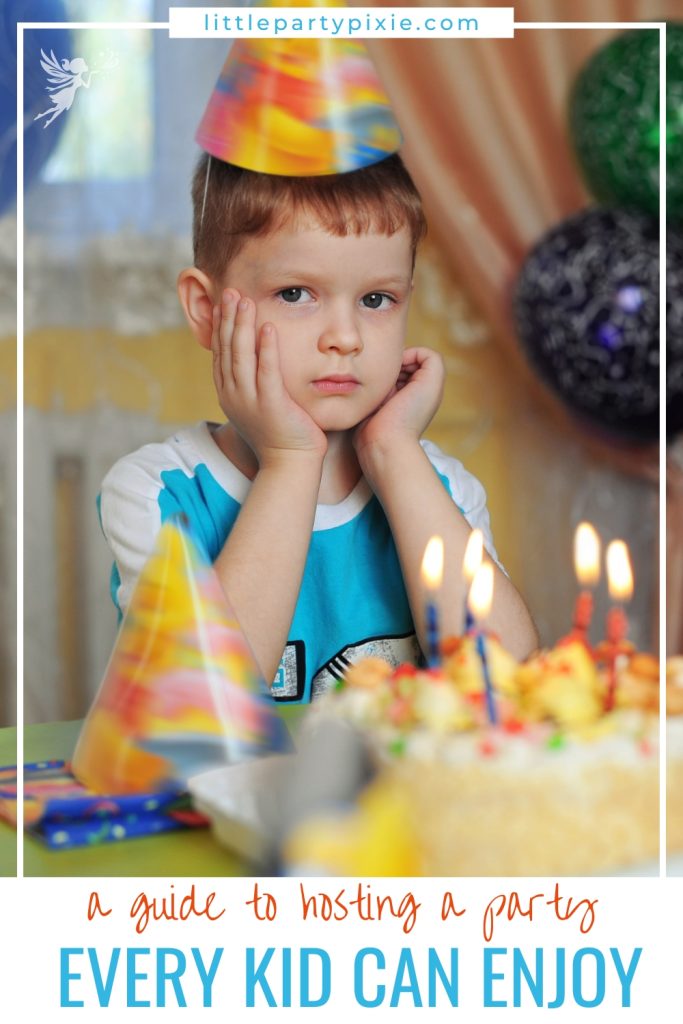
Food allergies: the easiest win in the room
Food allergies are more common than most hosts expect — they affect roughly 1 in 13 U.S. children (1), and food allergy diagnoses have been rising over the past two decades. Translated: if you’re hosting more than a small handful of kids, there’s a real chance one of them has a serious allergy, not just a preference.
- Ask before you plan, not after. Etiquette guidance on this is consistent: build the allergy question into the invite or RSVP itself rather than asking at the door, since that gives you planning time and lets the guest answer privately instead of announcing it in front of everyone. Something simple works (2): “Any allergies or dietary needs I should plan around?”
- Label, don’t assume. A simple card by each dish (even a cute one that matches your theme) saves a parent from having to interrogate you mid-party.
- Keep one “safe” station. You don’t need a fully allergen-free party — just one clearly labeled area free of the big allergens (nuts, dairy, eggs, gluten) so there’s always something every kid can grab without asking.
- Don’t take it personally if they bring their own food. For families managing a serious allergy, bringing a safe dish or a backup plate isn’t a comment on your cooking — it’s just how they keep their kid safe at every party, not just yours.
Tackling Halloween? We talk here specifically about making this candy-focused holiday more inclusive
Sensory sensitivities: small environmental tweaks, big difference
Sensory sensitivities show up most often alongside autism and ADHD — autism now affects roughly 1 in 31 8-year-olds in the U.S. — but plenty of kids without any diagnosis are sensitive to noise, light, or texture too.
A speech therapist who works with neurodivergent kids put it well: a celebration tends to go better for a sensory-sensitive child when there’s structure and predictability — clear expectations set ahead of time, a defined start and end, and a built-in option to step away. That’s a low bar for any host to clear.
- Designate a quiet corner. A chair, dim lighting, and something soft to hold (even just a cushion). It doesn’t need an announcement — kids who need it will find it.
- Watch the balloon situation. Sudden pops are one of the most common sensory triggers at parties. Foil balloons or skipping them altogether avoids it entirely.
- Give a heads-up before loud moments. A quick “okay, we’re about to sing!” before the cake comes out lets a sensitive kid prepare instead of getting blindsided.
- Dial back competing noise. One sound source at a time — music or games, not both layered on top of each other.
ADHD and high-energy kids: work with the energy, not against it
ADHD shows up in a meaningful share of any kid’s-party guest list — about 1 in 9 U.S. children have been diagnosed with ADHD at some point (3). The good news is that the adjustments that help these kids tend to make the party more fun for everyone, not less.
- Put movement first. Active games or running-around time near the start of the party, before sit-down activities like cake or crafts, channels the energy instead of fighting it.
- Keep structured stretches short. Most kids — ADHD or not — start to lose focus after 60–90 minutes of any one activity. Build in a natural shift in pace rather than one long block.
- Use a visual or verbal countdown before transitions. “Five more minutes of the bounce house, then it’s cake time” gives a concrete heads-up instead of an abrupt stop.
- Hand them a job. Passing out napkins, leading the next game, being “in charge” of something — it channels energy into something useful and makes them feel important instead of singled out.
Shy and introverted kids: permission to opt out is the gift
It’s worth knowing that “shy” and “introverted” aren’t the same thing, even though they’re often used interchangeably.
As one pediatric psychologist explained(4), introversion is a genetically inherited temperament about how a person recharges, not the same as shyness, which is closer to a fear of social judgment — and both are completely normal, not something to fix before the party starts.
- Never force participation. A clinical psychologist who works with anxious kids made a point worth sitting with(5): just because most kids love birthday parties doesn’t mean it reflects badly on a child — or their parent — if they’re more hesitant. Let a shy kid opt out of a game without making a moment of it.
- Give them an easy “in.” A buddy role, a partner for an activity, or a specific small task gives a low-pressure way to participate without needing to jump into a big group cold.
- Let watching count as participating. A kid sitting at the edge of the action, taking it all in, may be enjoying themselves exactly as much as the kid in the middle of it.
- Have a retreat spot that doesn’t feel like punishment. Same idea as the sensory corner — just a place to recharge, not a time-out.
Read Next: You may also be interested in our guide to hosting small parties and 1:1 celebrations for kids – thoughtful ways to help the socially shy or those years when ‘big’ feels too much
Anxiety and unpredictability: structure is kindness
Anxiety in kids is common enough that it’s worth planning for as a matter of course — about 11% of U.S. children ages 3–17 currently have a diagnosed anxiety condition(6). For an anxious kid, the scariest part of a party is often not knowing what’s coming next.
- Share a loose run of the day if a parent asks. You don’t need a printed itinerary — even a casual “we’ll do games, then cake, then open presents” answer helps a parent prep their kid in advance.
- Keep transitions predictable. The same opening and closing routine every time (a welcome activity, a clear “goodbye” moment) gives anxious kids something familiar to hold onto, even at an unfamiliar party.
- Avoid surprise elements without warning. A surprise entertainer, a sudden game change, an unannounced guest — give a heads-up to parents in advance so they can prep their kid if needed.
The conversation that ties it all together
Here’s the one thing that would have saved me the most stress over the years: just asking.
A simple line on the invite or RSVP — “Anything I should know about your kid before the party — allergies, sensitivities, or anything that would help them have a good time?” — does more work than any single tip on this list. It tells parents you’re paying attention before they even walk in the door, and it means you’re not guessing on the day.
You won’t get it perfect every time, and that’s fine — nobody expects you to. But a few small, considerate choices, made before the first guest arrives, are usually all it takes for every kid at the party to actually have a good time, not just the ones who were always going to be fine anyway.
References and further resources
If you’d like to dig deeper into some of the topics we’ve discussed here:
- FoodAllergy.org
- CDC Data
- South Denver Therapy – Autism Statistics
- Sensory Friendly Parties – Main Line Parent
- Introversion article by Newsweek
© Little Party Pixie 2026