Small Birthday Party Ideas for Kids (That Feel Just as Special)
Not every child counts down to a room full of balloons, a crowd of classmates, and a game of pass the parcel that somehow ends in tears.
Some kids find that kind of party genuinely overwhelming.
Some are going through a phase where friendships are complicated, and the guest list is shorter than you’d hoped.
Some are naturally quieter souls who would rather celebrate with people they actually love than perform for a dozen kids they barely know.
And some are dealing with things like anxiety, sensory sensitivities, or social struggles that make a big traditional party feel less like a celebration and more like an endurance test.
Whatever brings you here, you are not alone — and you have not failed your child by wanting something different. Smaller, calmer, more intentional birthday parties can be genuinely wonderful. This guide is about making them that way.
Not ready to plan yet? Save these ideas to Pinterest for later
First: Check In With Your Child About What They Actually Want
Before you plan anything, have a low-key conversation with your child about their birthday. Not a loaded one — not “so, who do you want to invite?” before they’ve even thought about it — just an open, curious one. What do they want to do? What would feel fun? Is there one person, or two, they’d really like to spend the day with?
You might be surprised. Some children who struggle socially still want a party — they just want it to look different to what you’re imagining. Others might light up at the idea of a special day that’s just the two of you. Involving your child in the decisions, even in small ways, gives them ownership of their own birthday and takes a lot of guesswork off your plate.
Clinical psychologist Dr. Sarah Bren, who has a whole podcast episode dedicated to parents worried no one will come to their child’s birthday party (1), points out something important: your child may actually be more comfortable with the state of their social life than you are. If you approach planning in a state of anxiety, they’ll take their cues from you. So take a breath first. Then plan.
Why Smaller Can Actually Be Better
There’s a tendency to think that a big party means a good birthday, and a small one means something went wrong. It doesn’t. Many children — particularly those who lean more introverted or who find groups tricky — genuinely prefer one or two close people over a gaggle of partygoers.
Clinical psychologist Carla Marie Manly explains that introverted children feel stressed and anxious when pushed into too many extroverted activities, and that what looks like shyness or reluctance is often simply a child’s nervous system doing what it’s built to do. That’s not a character flaw to fix before the party. It’s useful information for planning one.
For children who find crowds and noise overwhelming, the brain’s threat-detection system can tip into fight, flight or freeze mode when faced with too much stimulation at once — showing up as meltdowns, tears, withdrawal, or a sudden desperate need to go home. A smaller, calmer celebration sidesteps all of that and gives you a much better chance of a day that actually feels like a celebration.
The Small Gathering: Making It Feel Like a Big Deal
If you’re going with a small guest list — two or three friends, a cousin, a classmate they actually like — here’s how to make it feel intentional and special rather than thin.
Let the birthday child choose the activity
Planning with your child is crucial. Let them choose the activities. Sometimes just free play in the backyard is enough, and it won’t put anyone on the spot. A structured schedule of activities, on the other hand, can actually work well for a child who finds unstructured social time harder — having something to do removes the pressure to just chat.
Pick the right kind of activity
Chaotic activities can quickly overwhelm some children. Opt for calmer ones and gauge your child’s reaction as you go. A clear but flexible plan helps — an unstructured party can feel chaotic for a child who finds it hard to read social situations and doesn’t know how to join in.
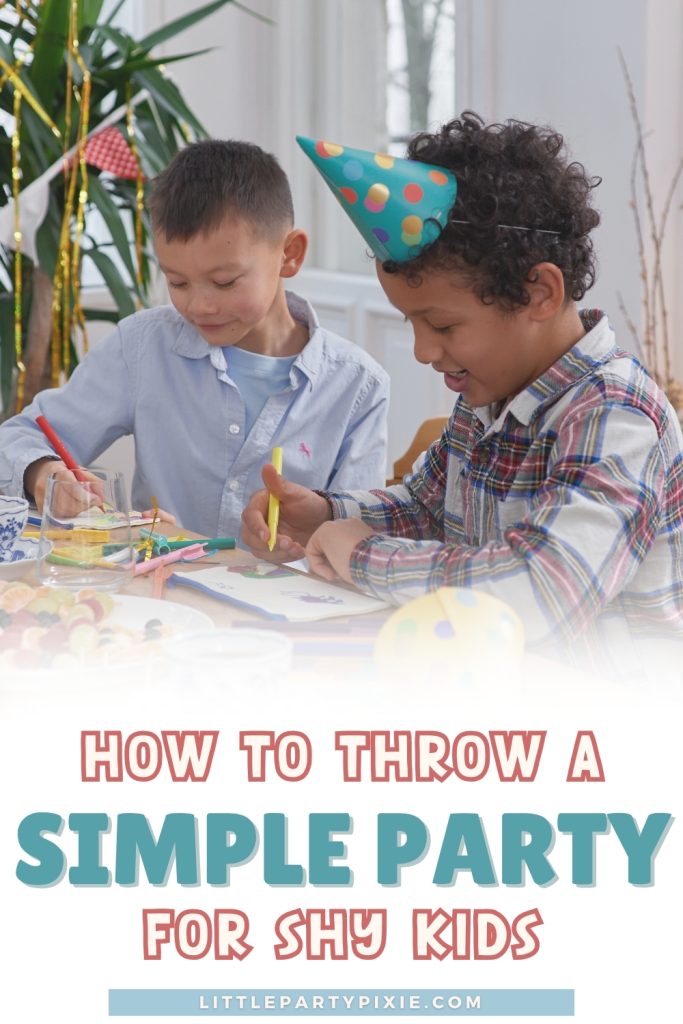
Activities where everyone is focused on making something together — baking, decorating cupcakes, a craft project, pottery painting — are brilliant for this. The activity does the social heavy lifting so the kids don’t have to.
Rethink the “Happy Birthday” moment
For children who find being the centre of attention uncomfortable, carrying the cake in as the guests sing puts all eyes on the cake rather than the birthday child. Or you could let your child blow out candles with just family first, take a photo, and then serve the cake to guests without the full fanfare. There’s no rule that says every element of a birthday party has to happen a certain way.
Make the setting feel genuinely special
A small gathering in your home, decorated with their favourite colours, their favourite food for lunch, a birthday banner with their name on it — these details signal this day is for you just as clearly as a venue hire and an entertainer do.
The Solo Celebration: Just the Two of You (or Just Family)
Sometimes the most honest and kind thing you can do is scrap the party format entirely and replace it with a day built entirely around your child.
This is not a consolation prize. For children who find social situations genuinely hard right now, a special one-on-one experience can be more memorable and more meaningful than any party. One mum writing about her introverted daughter’s birthday describes taking her to the zoo, just the two of them — going early, seeing giraffes, eating ice cream — and everyone having a wonderful time. No meltdowns. No social navigation. Just a good day.
Ideas that work really well for a birthday experience day:
- A cooking or baking class for the two of you
- A trip to somewhere they’ve been asking about — a wildlife park, an art gallery, a trampoline centre, a museum
- A “spa day” at home with face masks, their favourite films, and a fancy lunch you’ve made together
- A backstage or behind-the-scenes experience related to something they love
- An escape room, if they’re old enough and that appeals
- A pottery or craft workshop
For more experience ideas tailored to different ages, we have a full guide to experience gifts for families that’s worth a browse — many of the ideas work just as well as a birthday day out as they do a gift.
Activity-Led Parties: Why Structure Is Your Friend
If your child does want some friends there but you’re worried about how the social dynamics will play out, structured activity parties are consistently the most successful format for children who find groups tricky. Here’s why: when everyone has a job to do, nobody has to just be there making conversation. The activity carries the weight.
Child therapists note that structured social situations feel significantly less threatening for anxious children because there’s less room for the unknown — the thing that tends to trigger worry most. An activity gives children a script of sorts: you’re here, you’re doing this thing, here’s what happens next.
Good structured activity formats for smaller parties:
- Baking or decorating — everyone makes something, everyone eats it. Built-in conversation. Built-in purpose.
- Craft and keep — everyone makes something they take home. Candle-making, tie-dye, jewellery, slime, bath bombs. Lots of kits available online.
- Movie night with a “concession stand” — blankets, popcorn in paper bags, a little menu card. Shared experience, no performance required.
- Scavenger hunt — works brilliantly with two to four kids. Teams them up so they’re working together rather than competing.
- Outdoor adventure — den building, a nature trail, a trip to an adventure playground. Physical activity is great for anxious children because it channels energy and reduces self-consciousness.
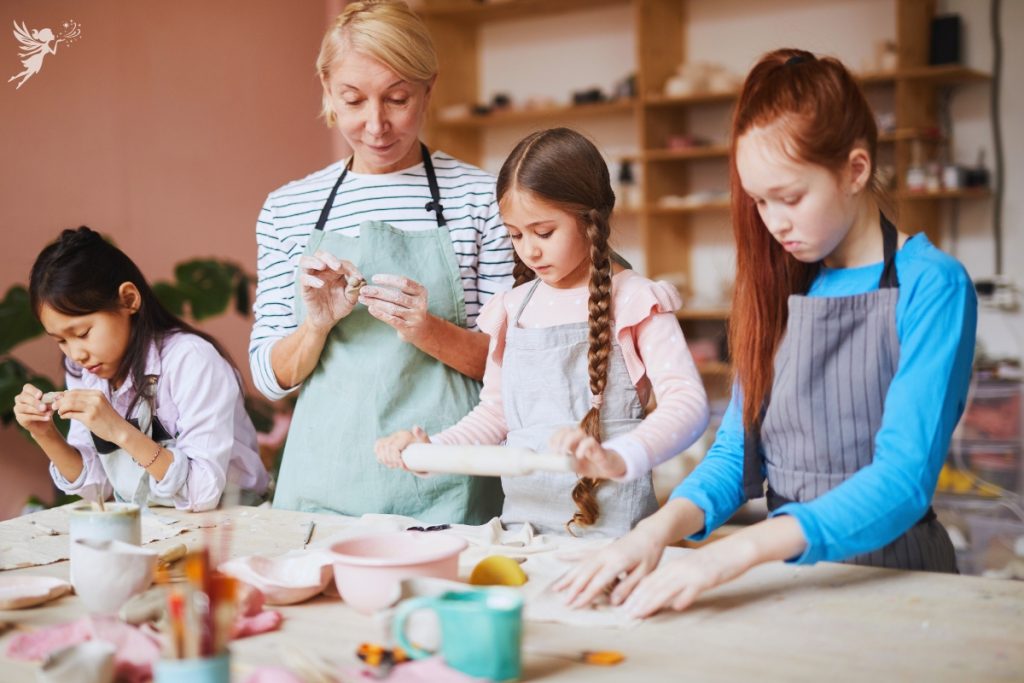
- Creative workshop at a venue — pottery painting studios, art cafes, and ceramics workshops are low-pressure and naturally calm. An art-making party at a ceramics or painting studio can actually feel easier for some children because all the partygoers are engaged in an organised activity outside the home, on neutral territory rather than your child’s space being “invaded.”
When They’re Getting Older: The Tween and Teen Birthday
The 10-14 age range deserves special mention because, socially, it can be the hardest stretch of all. Friendships at this age are intense, shifting, and sometimes brutal — a fallout in the week before a birthday can derail a whole guest list overnight.
Add in the self-consciousness that comes with early adolescence, the anxiety about who likes who and who said what, and the very real fear of being seen to try too hard, and a traditional party can feel like enormous pressure for a child who is already navigating a complicated social landscape.
For this age group in particular, less structure and fewer people is almost always the better call. Rather than a party, consider giving your child a budget — a reasonable one that feels like a treat — and letting them choose one or two close friends to spend it with. They could try:
- A trip to the cinema followed by food.
- A day at a theme park.
- An afternoon at the mall with lunch included.
The freedom to choose both the activity and the people removes almost all of the social anxiety from the equation and hands control back to your child at an age when control over their own life matters enormously to them.
It also sidesteps the invitation politics entirely — no one is visibly left out, no one is counting the guest list, and your child doesn’t have to perform happiness in front of a group when they might not feel it.
For a child going through a genuinely hard patch socially, this approach can feel like a lifeline. It says: your birthday matters, you deserve to celebrate, and you get to do it entirely on your own terms.
What to Say — to Other Parents, and to Your Child
Wording the invitation
If you’re keeping the guest list short, you don’t owe anyone an explanation, but it can help to keep the invite warm and positive. Something like: “We’re keeping it small and low-key this year — [child’s name] would love to have [friend’s name] join them.” That framing — we’re keeping it small — positions it as a deliberate choice, not a default.
Talking to your child about the size of the party
If your child is old enough to notice and ask questions, be honest in a matter-of-fact way. “We wanted it to be just the people you’re really close to” is a perfectly good answer. You don’t need to over-explain. Children generally read the tone of how something is presented more than the words themselves — if you’re relaxed about it, they’re more likely to be too.
If your child is worried about it themselves
The Child Mind Institute has really good guidance on supporting children who feel anxious about social situations, including birthday parties. Clinical psychologist Dr. Rachel Busman makes the point that just because lots of kids like birthday parties, it doesn’t mean it says anything about you or your child if they find them hard. Worth bookmarking for a read.
Making Any Birthday Feel Like a Big Deal
Regardless of the format you go with, the things that make a birthday feel genuinely special are almost never about scale. They’re about attention. Some easy ways to make your child feel celebrated, whatever the day looks like:
- A birthday banner with their name — shop-bought or homemade, it signals this day is yours
- Their favourite meal for dinner, chosen entirely by them
- A small “morning of” ritual — special breakfast, a birthday balloon on their chair, opening one gift before anything else happens
- A little birthday morning note left somewhere they’ll find it
- Letting them pick the film, the music, the activity — for the whole day
- Taking photos of the moments that matter, not just the posed ones
The goal isn’t to replicate a big party in miniature. The goal is for your child to end the day feeling seen, celebrated, and loved by the people who matter most to them. That’s entirely achievable — whatever the guest list looks like.
Read Next: Our guide to inclusive hosting – when the small things can be a big deal to some of your guests, from allergy awareness to sensory needs
If You Want to Read or Listen More
Sometimes a birthday party is just a birthday party. But sometimes it’s the thing that brings a bigger worry to the surface — about friendships, about where your child fits, about whether things will get easier. If you’re in that place, here are some genuinely helpful places to go next.
Podcasts
- Securely Attached with Dr. Sarah Bren — Episode 371 is directly relevant: “I’m Worried No One Will Come to My Child’s Birthday Party” — two clinical psychologists talk through exactly what to do when you’re facing that fear. Warm, practical, and reassuring. Listen here.
- Good Inside with Dr. Becky Kennedy — One of the most trusted parenting voices around right now. Covers emotional regulation, friendships, and helping children who find the world a bit harder to navigate. Available wherever you listen to your podcasts.
- Ask Lisa: The Psychology of Parenting — Dr. Lisa Damour covers child and teen mental health in an accessible, non-alarmist way. Particularly good on social anxiety and friendship struggles.
Books
- Quiet Power: The Secret Strengths of Introverts by Susan Cain — The children’s and teens’ version of her landmark Quiet, written for kids aged 8 and up but with a parent and teacher guide at the back. If you’ve ever wondered why your child seems like a completely different person at home versus out in the world, this book will feel like someone finally put it into words. Find it on Amazon
- Raising the Shy Child by Christine Fonseca — Written by a school psychologist, this one is specifically for parents of children with social anxiety. It covers friendship struggles, school dynamics, and gives you real strategies rather than vague reassurances. Find it on Amazon
- Anxious Kids, Anxious Parents by Reid Wilson and Lynn Lyons — Worth a read if you suspect your own worry about your child’s social life might be feeding theirs. Compassionate rather than finger-pointing, and genuinely useful. Find it on Amazon
Websites
- Child Mind Institute — Their piece on helping socially anxious children is written by clinical psychologists and is one of the most straightforward, no-nonsense resources out there. No jargon, no drama.
- Understood.org — If you think there might be more going on — sensory sensitivities, ADHD, autism — Understood is the best starting point. It’s written for parents, in plain language, and covers the school-age years really well.
- Lurie Children’s Hospital — A clear, reassuring explainer on what social anxiety actually looks like in children and what genuinely helps.
You’re Doing Better Than You Think
I want to say something directly before you close this tab.
I’ve seen the quiet panic that sets in when a birthday is approaching, and you’re not sure who to invite, or whether the people you do invite will actually show up. I’ve been in the conversations where girls are being unkind, and your child is on the outside of it, not quite sure why.
I’ve watched moms navigate birthday planning after a house move when their child hasn’t found their people yet — new school, new town, not a single familiar face to put on a guest list. And I’ve sat with the particular ache of wanting so badly to give your child a celebration that feels normal when normal feels far away right now.
None of that makes you a bad parent. None of it means your child is broken or behind or destined to struggle. Kids go through hard patches. Friendships shift, especially in the elementary school years, sometimes dramatically and seemingly overnight. A birthday that looks different this year is not the story of your child’s whole life — it’s just this birthday, this year.
Smaller can be warmer. Quieter can be more meaningful. And a child who ends the day knowing they are deeply loved by the people in the room — even if that room only has three people in it — has had a good birthday.
Want more celebration inspiration?
If you’re in a more settled season and want ideas for when the guest list is a little longer, we have plenty of birthday party guides:
- Birthday party ideas for little girls
- Birthday party ideas for little boys
- Gender neutral themes that work great for coed groups
- Theme-combining and tips for hosting joint sibling birthday parties
- Inspiring party ideas for ‘tween’ parties – tackling those in between years
Because some years it’s a full house, and some years it’s just your favourite people — and both of those can be exactly right.
© Little Party Pixie 2026