Combined Sibling Birthday Party Themes: Ideas That Actually Work for Two Kids
There’s a moment most parents of multiple children know well. The calendar fills up, the birthday invites start coming home from school, and you look at the two dates circled in marker — three weeks apart — and think: could we just… do one party?
Sometimes it’s a budget question. Sometimes it’s a sanity question. Sometimes the kids are young enough that neither one will remember anyway. And sometimes it’s all three at once.
The good news is that combined sibling birthday parties, done right, can be genuinely wonderful. Not a compromise. Not a “we had to” — but a celebration that feels bigger, more special, and more fun than two separate smaller parties would have been. The key is in the planning decisions you make before you get anywhere near a balloon arch or a theme.
This guide walks through all of it: the questions worth thinking through before you commit, how to find a theme that works for two very different kids, and — because we know how these things can go — some practical tips for keeping the peace when sibling feelings run high.
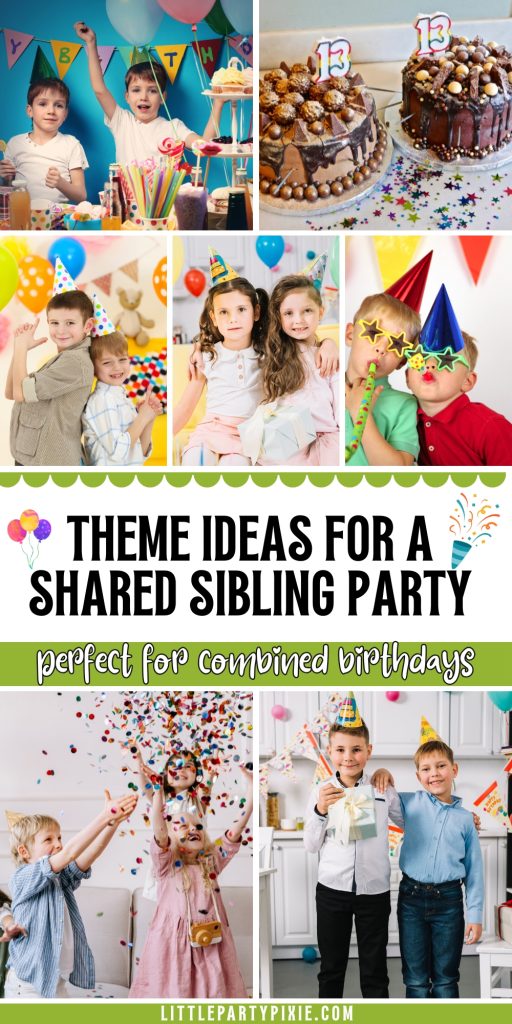
Not ready to start planning? Save these ideas to Pinterest for later
Should You Combine? The Questions to Ask First
Before you land on themes or decorations, there are a few bigger decisions worth sitting with. Getting these right makes everything that follows much easier.
How far apart are the birthdays?
The closer together the dates, the more naturally a combined party makes sense. Birthdays within the same month are the sweet spot — guests are making one trip, one gift budget, one RSVP.
Once you stretch to six or eight weeks apart, the logistics get murkier: whose birthday is it actually? Do guests feel obligated to come twice anyway? Are you accidentally shortchanging the child whose birthday falls further from the party date?
There’s no hard rule, but if birthdays are more than about six weeks apart, think carefully about whether combining genuinely serves both children — or whether it’s really just serving your schedule.
How big is the age gap?
A one-year age gap and a seven-year age gap are completely different planning challenges. Close-in-age siblings (one to three years apart) often have overlapping interests, similar energy levels, and friend groups that mix fairly easily.
A big age gap — say, a 3-year-old and a 9-year-old — means different nap schedules, different activity tolerances, different social dynamics, and probably entirely different friend groups. It can still work, but it requires more intentional planning around activities and timing.
One theme or two?
This is the question at the heart of every combined sibling party. There are genuinely two valid approaches:
The shared theme: Find one theme both children can get behind, or that works naturally for both, without either child feeling like they got the “leftover” version. This is cleaner visually, easier to execute, and tends to feel more like a real party than a compromise.
It works best when kids are close in age and have some overlapping interests, or when the chosen theme is broad enough that each child can claim a corner of it. (A nature/adventure theme, for example, can let one child lean into animals and another into camping without it looking disjointed.)
The split theme: Two distinct themes run side by side. This sounds chaotic, but it can actually look gorgeous when executed with a unifying color palette. Think half the room in deep blue and gold for a space theme, the other half in coral and aqua for an under the sea theme — linked by complementary colors and shared decorative elements.
It requires more planning, but the result is a party that genuinely honors both children’s individuality. We’ll show you how this works in practice for several combinations below.
Do the kids actually want this?
Worth asking directly, especially once children are old enough to have real opinions (roughly age 4 and up). Some kids will love the idea — a bigger party, more friends, more cake. Others will feel genuinely sad about sharing their special day. Neither reaction is wrong.
If a child is clearly unhappy about the idea, it’s worth at least acknowledging that before you commit, and thinking about how to build in something that feels just theirs: their own mini cake, their own color, their own “birthday kid” moment during the party.
What does each child’s friend group look like?
If your children are at different schools, in very different social stages, or have a significant age gap, merging guest lists can get awkward. A 5-year-old’s classmates and a 10-year-old’s friends will need completely different activities and supervision levels.
Think through whether you can run the party in a way that gives each group something to do — or whether separate parties might actually be the more practical solution.
One cake or two?
Two cakes. Always two cakes. This is non-negotiable if you want both children to feel genuinely celebrated. They don’t need to be the same size — a large cake for the group and a small personal cake for each child both works beautifully — but each child should have their own candles and their own moment.
Sharing a birthday cake, no matter how lovingly it’s decorated, is one of the fastest routes to a tearful combined party.
Combined Sibling Birthday Party Themes
Once you’ve worked through the planning decisions and landed on a combined party, the theme is where the fun starts. Below are ideas that work particularly well for two kids — some are naturally unified, others are designed to be split and still look cohesive.
1. Pirates and Mermaids
The classic for a reason — and genuinely one of the most satisfying split themes to execute. Pirates and mermaids share a natural world (the ocean), which means your color palette and decorative language overlap without the two sides fighting each other. Blue, teal, gold, and white run through both. The treasure chest motif works for pirates and mermaids alike.
- Colors: Deep navy, teal, gold, coral, sandy cream — shared across both sides
- Decor: Split the room or table down the middle. Pirate side: treasure chests, rope, compasses, skull-and-crossbones bunting. Mermaid side: shells, pearl garlands, iridescent fabric, starfish. Overlapping elements: netting draped across both sides, blue balloon clusters throughout.
- Games: Treasure hunt (works for both), “walk the plank” balance beam, shell toss, message-in-a-bottle craft
- Cake: One pirate cake, one mermaid cake — or a spectacular split cake that’s half pirate ship, half coral reef
- Gifts: Pirate dress-up sets, mermaid tail blankets, ocean-themed books, beach accessories
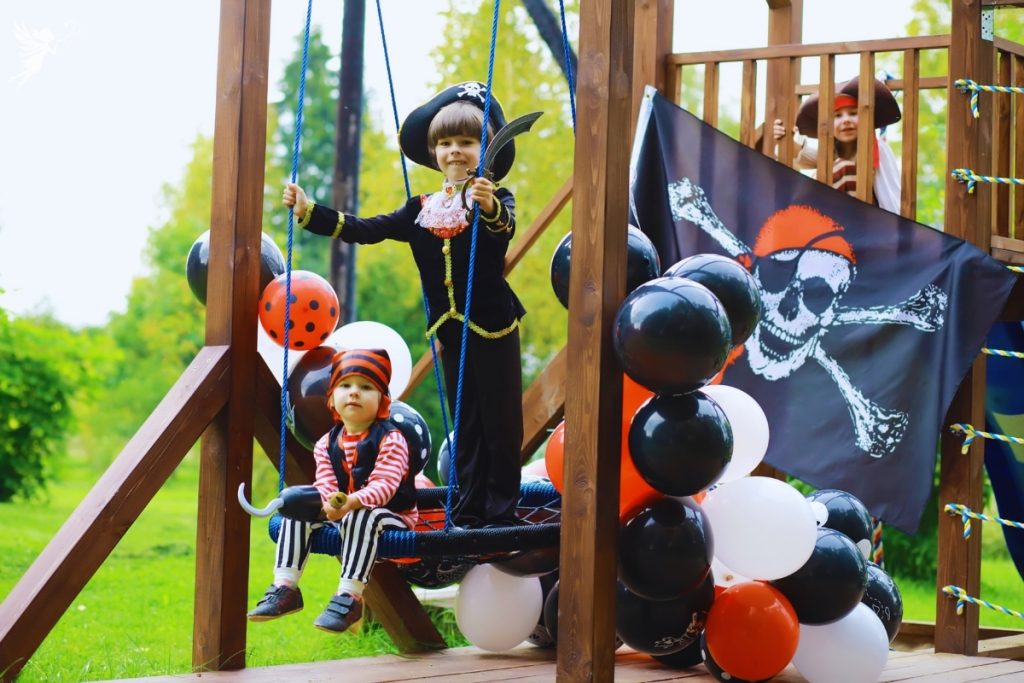
Best for: Brother/sister combination, close in age (2–8), where one child loves ocean adventure and the other loves magical sea creatures. One of the few truly split themes that looks intentional rather than chaotic.
2. Safari and Jungle
Arguably the most seamless combined theme of all — because safari is the jungle. There’s no split here, just one rich, textured world that every child can find something to love in. Animals, adventure, earthy tones, and lush greenery make this as visually cohesive as it gets.
- Colors: Jungle green, warm tan, terracotta, chocolate brown, cream
- Decor: Tropical leaf garlands, animal print balloons, stuffed safari animals as table decor, explorer hats as party favors, binoculars, specimen jars filled with sand and stones
- Games: Safari scavenger hunt, animal sound matching, “zookeeper says” (Simon Says), pin the tail on the lion
- Gifts: Animal figurine sets, safari explorer kits, nature encyclopedias, binoculars, National Geographic Kids subscriptions
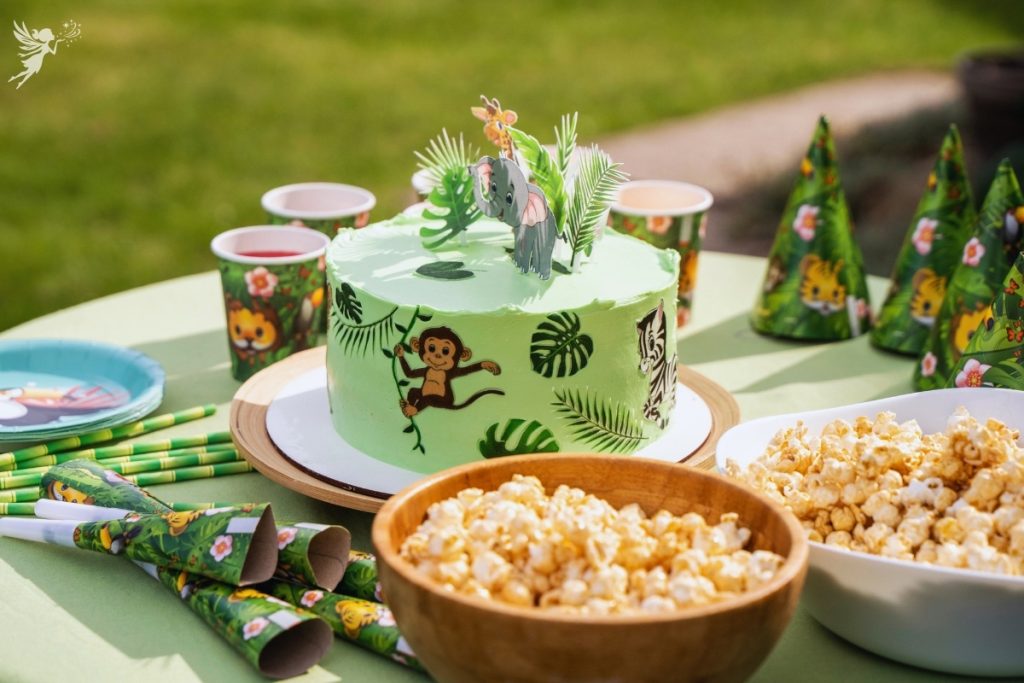
Best for: Any sibling combination, toddlers through age 7, works particularly well for a close age gap where interests overlap. Also works as a Wild One–adjacent first birthday for the younger child, while the older sibling gets the explorer angle.
See our full Wild One birthday party guide for more on this theme.
3. Space and Superheroes
At first glance, these seem like very different themes — but they share more visual DNA than you’d think. Bold primary colors, a sense of epic scale, action and adventure, dramatic lighting. The “hero” concept bridges both effortlessly: astronauts are heroes, superheroes travel through space. Lean into that connection and you have a unified party with two distinct zones.
- Colors: Navy, red, yellow, silver — cape-and-rocket palette
- Decor: One side: planet balloons, star garlands, foil constellation backdrops, astronaut helmets. Other side: Cape Station, hero shields as wall decor, comic book-style banners. Shared: bold primary color balloons throughout, a “mission control” snack table
- Games: Superhero training course (obstacle course), “launch the rocket” balloon activity, cape decorating station, planet ring toss
- Gifts: Cape and mask sets, LEGO space or superhero sets, star projector nightlights, comic books

Best for: Two brothers, or a brother/sister combination where one is space-obsessed and the other loves superheroes. Works best ages 3–9. The themes feel cohesive enough that guests won’t feel like they wandered into two different parties.
4. Fairy Tales and Knights
Castles, magic, adventure, and royalty — fairy tales contain multitudes, and that’s exactly what makes them work for a combined party. This isn’t about princess vs. prince; it’s about two children who both belong in the same story. One might be the brave knight, the other the enchantress — both are the heroes.
- Colors: Deep jewel tones — emerald green, royal purple, gold, deep red — plus touches of silver
- Decor: Castle backdrop, fairy light canopy, crown and shield table decor, lanterns, scroll invitations, “feast” style table setup with goblets
- Games: Dragon egg hunt, jousting with pool noodles, “quest” scavenger hunt, wand and shield decorating station
- Gifts: Dress-up sets (crowns, capes, swords, wands), fairy tale book collections, castle playsets
Best for: Brother/sister, two sisters, or two brothers — genuinely works for any combination. Ages 3–8. One child can lean into the magical/enchanted angle, the other into the warrior/adventure angle, without either feeling like the lesser role.
5. Under the Sea and Beach
Not quite a split theme — more of a continuum. The beach and the ocean beneath it share everything: color palette, textures, creatures, and that sun-soaked summery feeling. This is one of the smoothest combined themes to execute because the transition from “beach” to “under the sea” is completely natural.
- Colors: Sandy cream, aqua, coral, teal, driftwood brown, sunshine yellow
- Decor: Driftwood centrepieces, shell garlands, surfboard props, sun umbrellas, tropical flowers, fish net fabric, starfish and sea glass scatter
- Games: Water balloon games, surfboard balance challenges, “what’s in the rock pool” sensory tray, crab race
- Gifts: Beach toys, snorkel sets, underwater creature figures, sand art kits
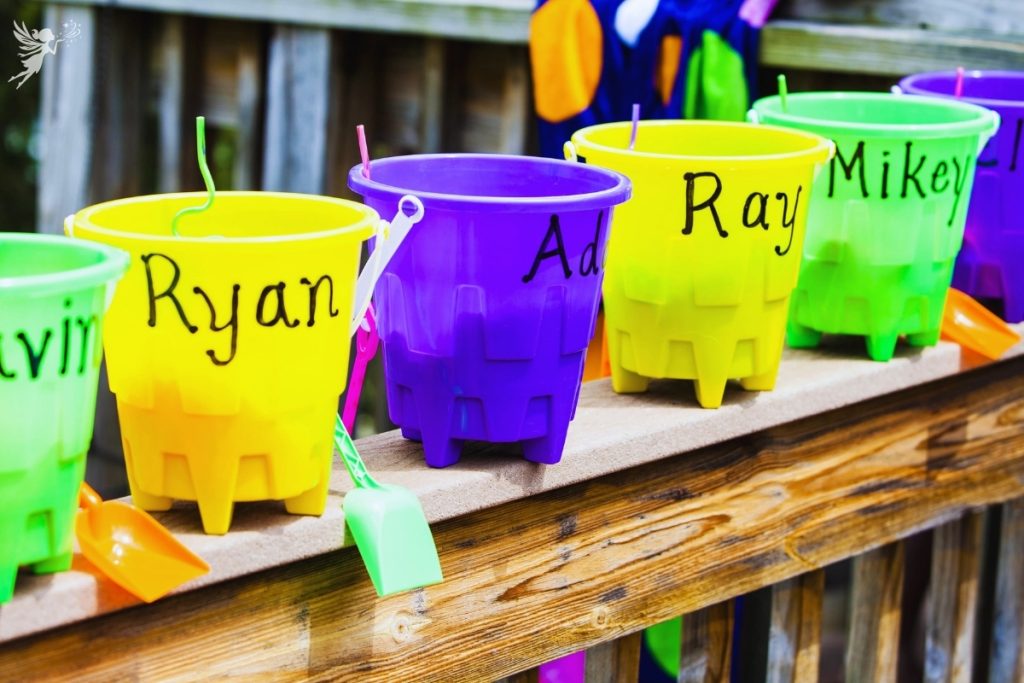
Best for: Any sibling combination, summer birthdays especially, ages 2–9. If one child loves mermaids or ocean creatures and the other is more of a beach and waves child, this captures both without a hard split. See our full Under the Sea party guide for deep-dive decoration ideas.
6. Rainforest and Explorer
A step beyond the standard safari theme — the rainforest brings in more color, more drama, and a slightly different visual world. Pair it with an “explorer” thread and you have a party where every detail can carry a sense of discovery. Kids can choose their creature, their corner of the forest, their explorer identity.
- Colors: Deep tropical green, bright parrot colors (teal, yellow, red, orange), earthy brown
- Decor: Hanging vine garlands, tropical bird cutouts, butterfly nets, explorer maps as table runners, specimen jars, magnifying glasses as favor details
- Games: Bug hunt, nature bingo, “identify that animal” quiz for older kids, creature craft (make your own tropical animal)
- Gifts: Bug kits, explorer backpacks, tropical animal encyclopedias, terrarium kits
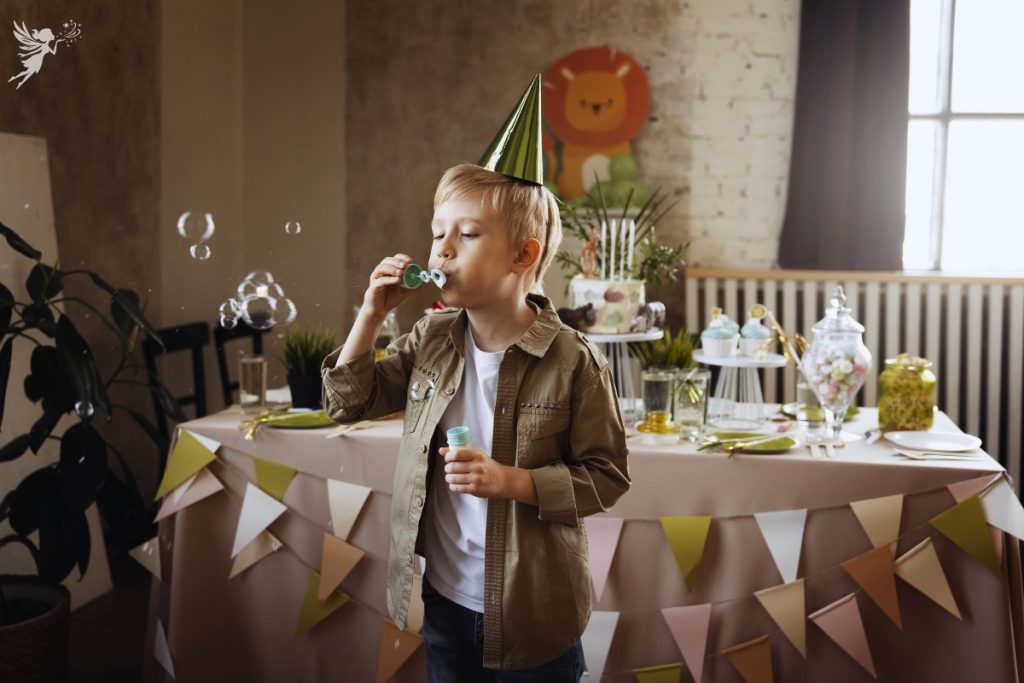
Best for: Any sibling combination, ages 3–9. Works particularly well for a big age gap — younger children engage with the bright creatures and sensory elements while older children can get into the explorer/discovery angle with more depth.
7. Cooking and Science
An unlikely pairing that works beautifully — because cooking is applied science, and both themes are activity-led rather than decoration-led. Set up a kitchen station and a lab station. Both involve mixing, measuring, and making something. Both produce something the kids can eat or take home. It’s genuinely clever when executed well.
- Colors: White and primary colors — lab coat meets apron aesthetic
- Decor: One side: beakers, test tubes, periodic table prints, lab coat hooks. Other side: mini chef hats, recipe card menus, utensil bundles, chalkboard menus. Shared: a “mad chef/scientist” banner combining both
- Activities: Baking soda and vinegar volcano (science), cupcake or pizza decorating (cooking), slime making, cookie decorating competition
- Gifts: Junior cookbooks, science experiment kits, baking sets, microscopes for older kids
Best for: Two siblings with genuinely different interests where one leans creative/culinary and the other leans analytical. Ages 5–10. Particularly good for a boy/girl combination or two children with a noticeable personality difference. The themes bridge without either child feeling like they compromised.
8. Dinosaurs and Fossils (Double Dino)
Rather than splitting the dinosaur world, lean into both sides of it: the living, roaring, terrifying dinosaur above ground, and the fossil-hunting archaeological world below. One child gets the dramatic dino-in-action angle; the other gets the scientist-explorer angle. Surprisingly different aesthetics from the same source material.
- Colors: Rich jungle green and rust (dino side), sandy tan and khaki (fossil/archaeology side)
- Decor: Large dinosaur balloons and footprint trail (dino side), excavation tray centerpieces with embedded plastic dinosaurs, “fossil” cookies as favors, dig site bunting
- Activities: Fossil dig in a sand tray (the highlight), dinosaur stomp games, dino egg hunt, “classify the dinosaur” quiz for older kids
- Gifts: Dinosaur figurine sets, fossil excavation kits, paleontology books, dino encyclopedias
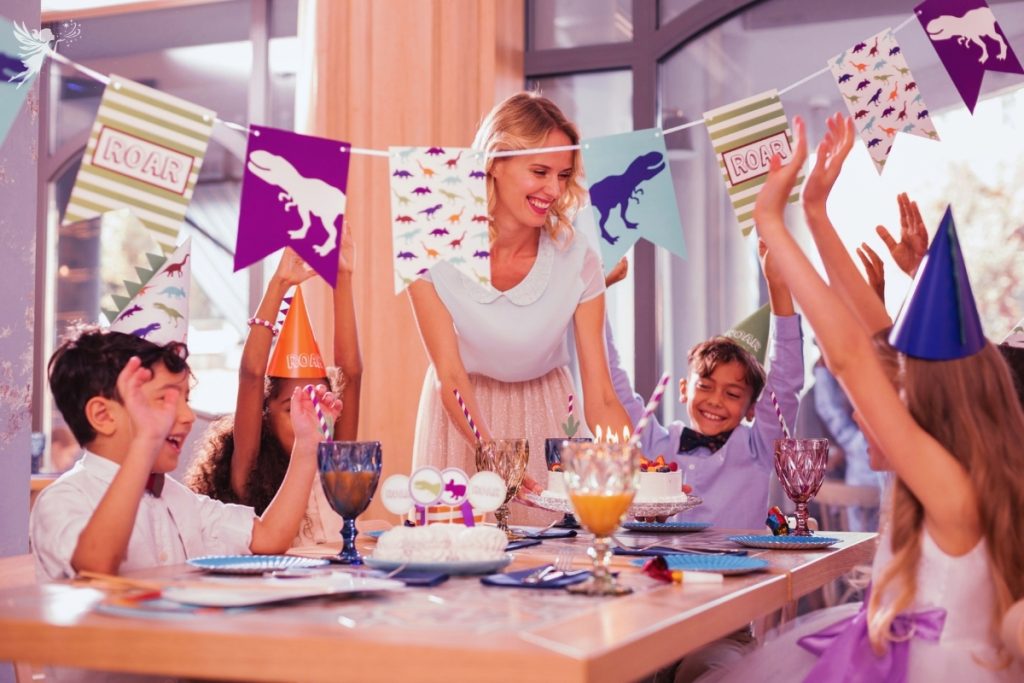
Best for: Two brothers, close in age (2–7), or any siblings who both love dinosaurs but approach them differently. Also a strong choice when one child is younger and drawn to the visual excitement of dinosaurs, and the older child wants something that feels a bit more sophisticated.
9. Art and Music
Two creative disciplines, one creative party. This is a theme for the family where both children are artistic but differently so — one sings, one paints, or one is theatrical, and the other is visual. The “creative studio” concept ties it all together, and the activities sell themselves.
- Colors: Bold, anything-goes rainbow — with a graphic, studio-feel aesthetic (black frames, white walls, pops of color)
- Decor: Mini easels with each child’s name, music notes as garlands or table details, paint-splattered tablecloths, gold star details, “record label” and “art gallery” zone signs
- Activities: Guided painting or canvas craft, make your own music shaker, karaoke corner, collaborative mural all guests contribute to
- Gifts: Art supply sets, instrument starter kits (ukulele, keyboard), sheet music books, recording microphones for older kids
Best for: Two sisters, or a creative boy/girl combination, ages 5–12. Works especially well when the children have strong individual identities — this theme celebrates difference rather than trying to smooth it over.
10. Garden Party and Butterfly
A naturally split theme that doesn’t feel split at all — butterflies live in gardens, so the two worlds are seamlessly connected. The visual palette is almost identical, and the details layer together beautifully. One child can lean into the garden and growing things; the other into the magic of butterflies and transformation.
- Colors: Soft sage green, lavender, blush pink, butter yellow, cream
- Decor: Floral centrepieces (real or paper), butterfly net props, seed packet favors, watering can details, pastel balloon clusters, wildflower table runners
- Activities: Plant a seed pot favor, butterfly wing craft, flower crown making, garden scavenger hunt
- Gifts: Gardening kits, butterfly growing kits (caterpillar to butterfly), pressed flower craft sets, nature journals
Best for: Two sisters, a mother/daughter party, or a girl-leaning combination. Ages 3–8. Also a beautiful choice for a spring birthday party regardless of gender. One of the more elegant combined themes when done with a soft, cohesive palette.
11. Camping and Stars
Daytime camping meets evening stargazing — two moods of the same outdoor adventure. The transition from “campout” to “space” happens naturally as you move through the party: outdoor activities and s’mores in the daylight hours, stargazing and glow-in-the-dark elements as it gets later. For a daytime party, run both aesthetics alongside each other.
- Colors: Forest green, tan, navy, orange (campfire), silver and gold (stars)
- Decor: Tent or teepee setup, campfire centerpiece with tissue paper flames, lanterns throughout, star garlands overhead, constellation map as backdrop, s’mores station
- Activities: Bug hunt, flashlight tag, constellation connect-the-dots, build-your-own s’mores bar, star projector show
- Gifts: Headlamps, star projector nightlights, nature journals, hammocks, constellation guides
Best for: Any sibling combination, ages 4–12. Particularly strong for a wider age gap — younger children engage with the camping and creature-hunting angle, while older kids can get into the astronomy side. One of the most relaxed, flexible combined themes to run.
12. Vintage Carnival and Circus
Bright, bold, generous, and fun for every single person in the room — the carnival/circus world is one of those rare themes where the more guests, the better it looks. It’s also endlessly flexible: each child can “own” a different act, stall, or corner of the carnival without any one of them being less exciting than the other.
- Colors: Red, white, yellow, royal blue — classic big top palette
- Decor: Striped bunting, popcorn boxes, ticket booth signage, pennant flags, vintage-style game stall signs, confetti everywhere
- Activities: Ring toss, duck pond, bean bag throw, face painting, “guess the number of sweets in the jar” — each becomes its own stall
- Gifts: Magic sets, juggling balls, circus performer books, costume dress-up sets
Best for: Any sibling combination, any age, large guest lists. One of the strongest options for a big age gap — there is genuinely something for every child at a carnival. Also works brilliantly if you’re combining three children’s birthdays, since the “lots of different stalls” structure accommodates multiple interests without any one child owning the whole thing.
Tips for Pulling This Off Without Tears
Let’s be honest: a combined birthday party isn’t always every child’s first choice. Sometimes it’s a budget decision. Sometimes the dates just land too close together. Sometimes you genuinely think it’ll be wonderful, and then the week before the party, someone decides they’re furious about it. Here’s how to handle the reality.
Have the conversation early, not the week before
If your children are old enough to have opinions about their birthday party, bring them into the planning process from the beginning. Surprise combined parties rarely land well. When kids feel like they had input — even if the final decision was yours — they’re far more likely to feel ownership over the result.
Give each child something that’s completely theirs
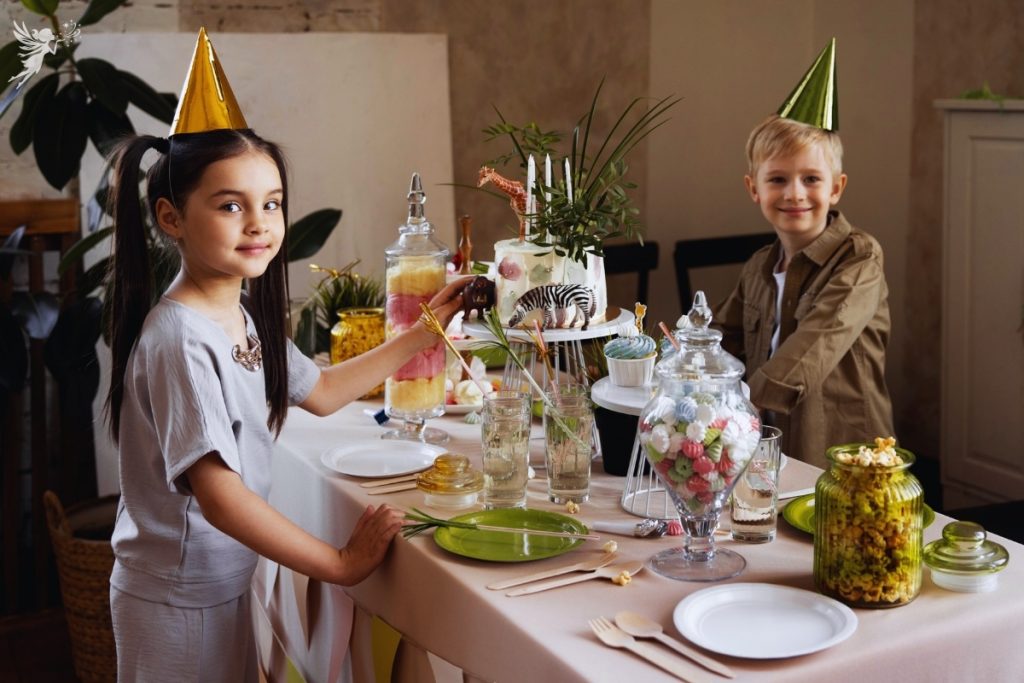
Regardless of how unified the theme is, every child needs at least one element of the party that belongs only to them. Their own cake (even if it’s small). Their own color within the shared palette. Their own “birthday kid” sash, crown, or moment. Their name on the banner.
These small gestures of individual recognition matter enormously to children and cost almost nothing.
Don’t let one child’s personality swallow the other’s
In most sibling pairs, one child is louder, more sociable, or more confident in group settings. Watch for the quieter child getting overlooked during the party — make sure both children are introduced to guests, both blow out candles with a fuss, both have their gifts acknowledged.
Separate friend group moments matter
If your children’s friends are very different ages or have nothing in common, build in some time — even 20 minutes — where each child gets to do something with just their friends. It doesn’t need to be a whole separate schedule; just a craft, a game, or a moment that belongs to each child’s group.
Keep the “whose idea was this” energy out of the room
Children pick up on parent stress faster than anything. If you made the combined party decision and one child wasn’t thrilled, don’t spend the day apologising for it or over-explaining. Commit to the fun, make it bigger and better than it would have been separately, and let the day speak for itself.
Have an exit plan for tensions
Siblings at parties, especially combined ones, can have moments. Build in a quiet moment mid-party — a calm craft station, a slow game, a snack break — where energy can settle before it tips into conflict. And brief the other trusted adults in the room: if things get heated, they’re on it.
Remember: the bar is fun, not perfect
The most memorable combined sibling parties are the ones where both children are laughing at the end, not the ones where every decorative element is coordinated. When in doubt, more cake, more music, more running around.
One Party, Two Stars
A combined sibling birthday party, planned thoughtfully, can be one of the warmest celebrations you throw. Two children, their friends, their families — all in the same space, celebrating two lives at once. It’s not a shortcut. When it works, it’s genuinely the best version of a birthday party.
The themes above are a starting point, not a rulebook. Mix and match, take what works for your specific children and your specific family, and don’t be afraid to throw out the rules entirely if something better occurs to you.

Looking for more kids’ party inspiration?
At Little Party Pixie, we’ve got party themes sorted every way you might need them:
- By season: Spring party themes | Summer birthday ideas | Fall party themes | Winter birthday parties
- By interest: Animal and nature parties | Adventure and outdoor themes | Creative and art parties | Science and activity parties
- More on gender neutral themes: If you want a shared theme that works beautifully for any child, our full guide to gender neutral birthday party themes has 15 ideas with color, decor, and gift notes — including several that cross over perfectly with the combined sibling approach.
© Little Party Pixie 2026